Cricket Song Farm

Cricket Song Farm
Showing posts with label heirlooms. Show all posts

Thursday, May 21, 2015

Heirloom Beets


Beets are easy to grow.  Plant your seeds about 3 inches apart for best results.  A beet seed is often referred to as a flower seed because 3 or more beets can grow from a single seed.  As the beets mature, carefully harvest the largest beet from the group and let the smaller ones continue to mature.  Keep harvesting  using this method until there is a single beet left and allow it to grow until the end of the season.  I leave several of the biggest beets in the ground to winter over (hoping the gophers don't find them) and collect the seed from them the following year. 


I particularly like to grow the Heirloom beet  "Cylindra".  This beet grows long roots that are just the right size for slicing to make pickled beets.  They are tasty in a fresh beet salad and the deep dark purple color makes a nice dye for hand spun yarn.


The Heirloom "Chioggia"  is an interesting beet to grow.  It has rings inside.  The taste in my opinion is not quite as earthy as the other beets I grow.  I do not like it quite as well, but it's unique colors make it a ,must in my garden!


The good ole stand by "Detroit Red"  produces  extremely well.  But my all time favorite is "Golden".  This beet does not preform as well as the other beets.  It takes a little more care, and make sure to keep the seeds moist after planting.  The germination rate is not quite as high as other beets.  The amazing taste is why I fuss over this beet.  It has the wonderful "earthy" taste of other beets, but I find is has a sweetness to it that puts it on the top of my list.

 My favorite is the "Golden Beet"


starting at far left:  Cilantro,  Bull's Blood Beets and Clyindra Beets

I intentionally plant my beets very thickly.  The greens (tops) are harvested  for market all through the summer.  In mid summer I begin picking through them and harvest the beets that are "baby beet" size. 
 Cutting the tops off the beets does not inhibit their growth because they quickly send up new leaves.  If you are growing for greens specifically, the Bull's Blood Beet and the Chioggia are good choices, but any beet variety will give you a good harvest of greens.  As the summer progresses I continue to harvest the beets as they mature.  By late summer I have thinned them out sufficiently for the roots to mature into a large beet.  I love baby beets with the greens intact, simmered until soft.  Eaten with a pat of butter and a splash of vinegar.  Try them roasted along with baby carrots and new potatoes.
I has been a while since I posted.  Been busier  than a hive of bees around here.  Hope everyone is getting their gardens in and that all your efforts will be rewarded with a big, bountiful harvest!


Friday, June 7, 2013

PLANTING SEEDS


Every year we save our seeds to plant for the next season's crops.

  The miracle of planting a tiny seed

and harvesting

 a beautiful red beet,

 or a vibrant multi-colored squash

takes my breath away. 


CHARD


ATOMIC RED CARROT


ARUGULA


LETTUCE


The gardens are in.  This past week has been crunch time.  I have about a 3 day window to get all the tender vegetables planted.  I need to wait until the soil warms up enough, but on the other hand, I can't get in to big of a hurry because I still have 2 weeks of frost.
Next week I will be starting seeds in the greenhouse for my fall harvest of Cole crops 
and planting the fall root crops out in the field.


As I plant I can taste the sweet carrot and the earthy essence of the golden beets.
I can smell the slight waif of pumpkin pie on the breeze.
I remind myself not to get to anxious for the harvest and enjoy the growing journey. 
 Each new day brings new growth and the beauty slowly unfolds before my eyes.
I sit in my old wooden swing under the tree and watch the garden grow.
Yes, there is a mighty, mighty miracle in those tiny, tiny seeds. 


Saturday, February 4, 2012

Saving Heirloom Seeds

I have saved my tomatoes this way  for years and then read an article a few years back that went into a-lot of detail about harvesting the seeds, soaking them in water for days, fermenting them and then pouring off the smelly, moldy water and finally drying them thoroughly before storing them.  I'm glad I didn't know the correct process all these years  I may have decided it was just to much trouble  and never saved my seeds!

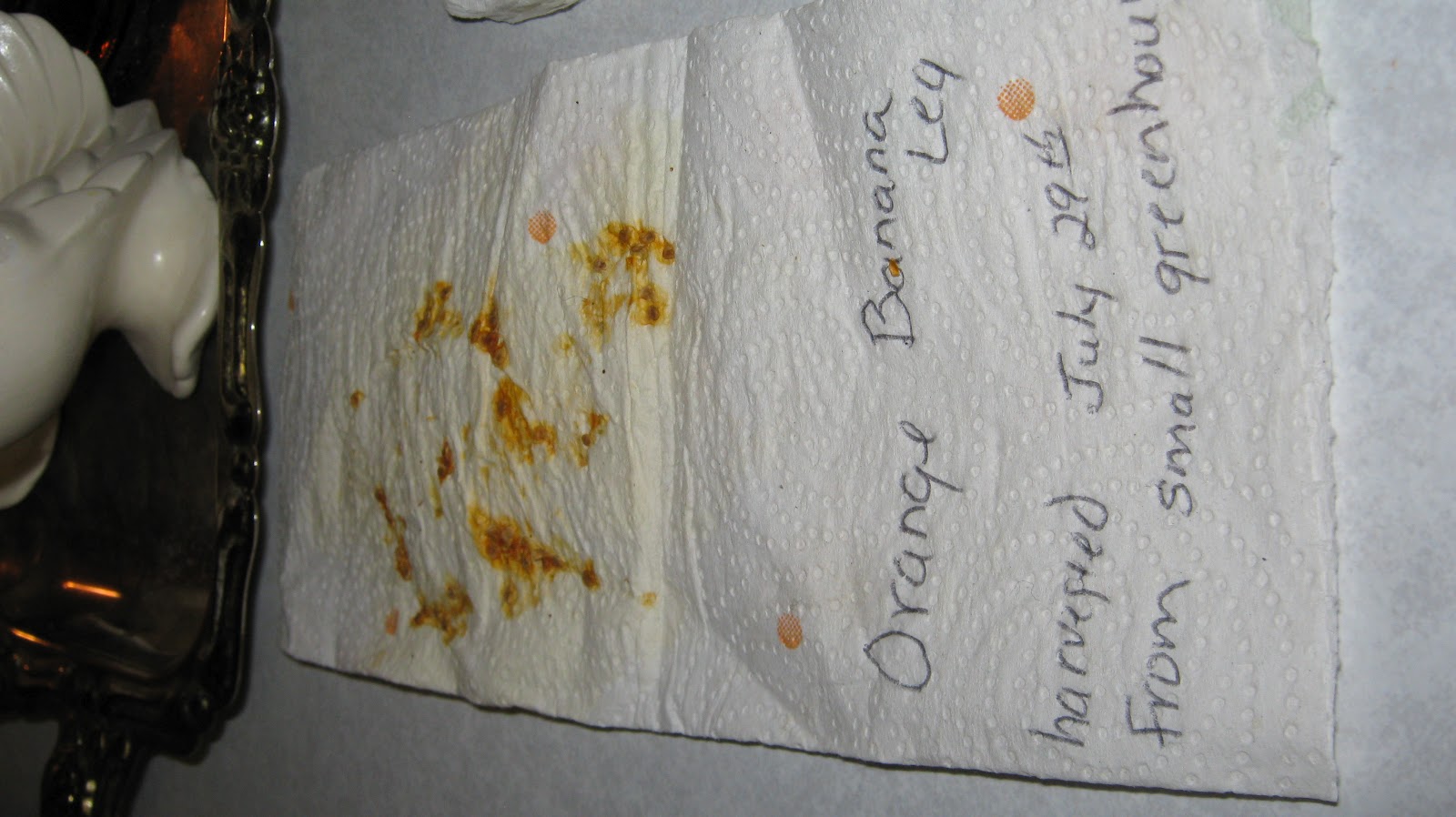
Below are tomato seeds  saved from an heirloom variety.  Harvest the first fruit to mature as long as it is of superior quality so you will be progressively bettering the variety.  I like to write the date on the paper towel so I know when it matured.


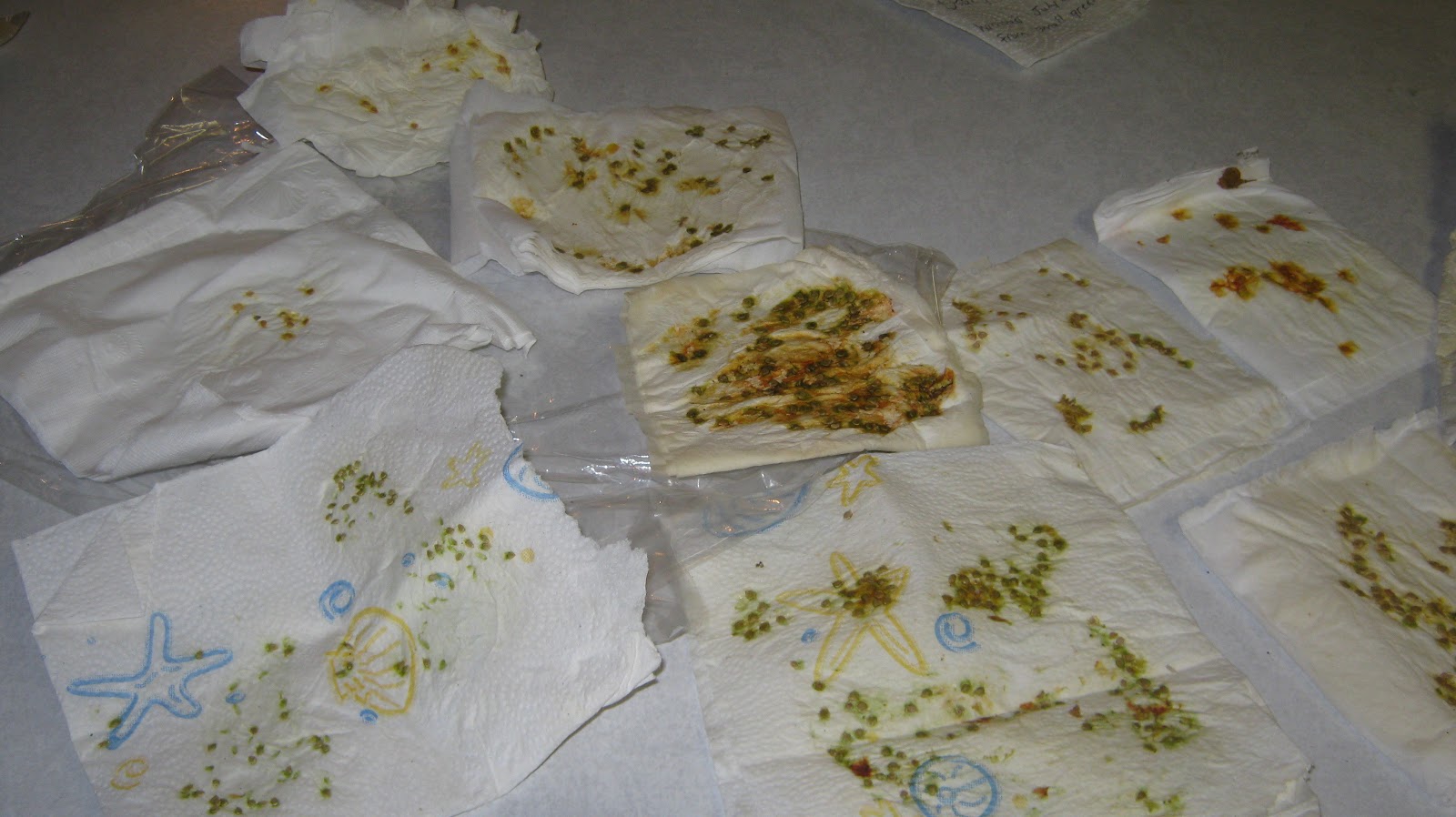
This is the way I save my Heirloom tomato seeds.

Woops I didn't write the date or kind on these.
I will just have to wait and see what kind they are!


  Get a paper towel , smoosh the seeds in a thin layer over the towel.  Now this is the most important part.  Grab a pen and write what kind of seed and the variety on the towel before you forget!  When the seeds are completely dry I store them in baggies according to vegetable variety and keep in the fridge.  Seeds from eggplant and peppers can be harvested this way also.


To plant, tear of a section of the paper towel, plant the towel and seeds under 1/4 inch of soil.  The paper towel will dissolve.  Transplant tomato seedlings into individual containers or pots when they are about 1-2 inches tall.


I harvest winter squash in the same manner.


When I harvest seeds from lettuce, spinach, arugula, or other greens I allow the plants that are the slowest to bolt to go to seed and harvest them.  This helps establish plants that will preform for longer periods of time.


Arugula Seeds


gather seeds from lettuce when the tops of the blossoms are dry and fluffy